
When you’re planning a custom machine, it’s critical to set a budget early. A clearly defined budget will help you evaluate your options and set priorities.
Knowing what you can invest helps you separate essential features from options that aren’t needed to meet your goals or could be considered for a future upgrade. At Gemini Industrial, we help you connect that budget to the problem you need to solve, so the design reflects your production priorities and ROI goals.
Define Your Budget Before Design Decisions
You do not need a finished machine design to start a conversation with a custom machine builder; you can simply come to us with a production challenge you’d like to address. But even if you don’t yet know what the solution should look like, a budget gives us a starting point for evaluating options.
When we begin working with you, our early discussions cover the basics, breaking down your challenge and how your current process works. And to help guide our next steps, we also discuss your budget and the results you expect from the investment.
A defined budget lets us create a realistic scope for your project. We can identify which features fit and which may exceed the available investment. Making those decisions early helps us avoid developing a design that ultimately exceeds your budget.
Evaluate Features by the Value They Provide
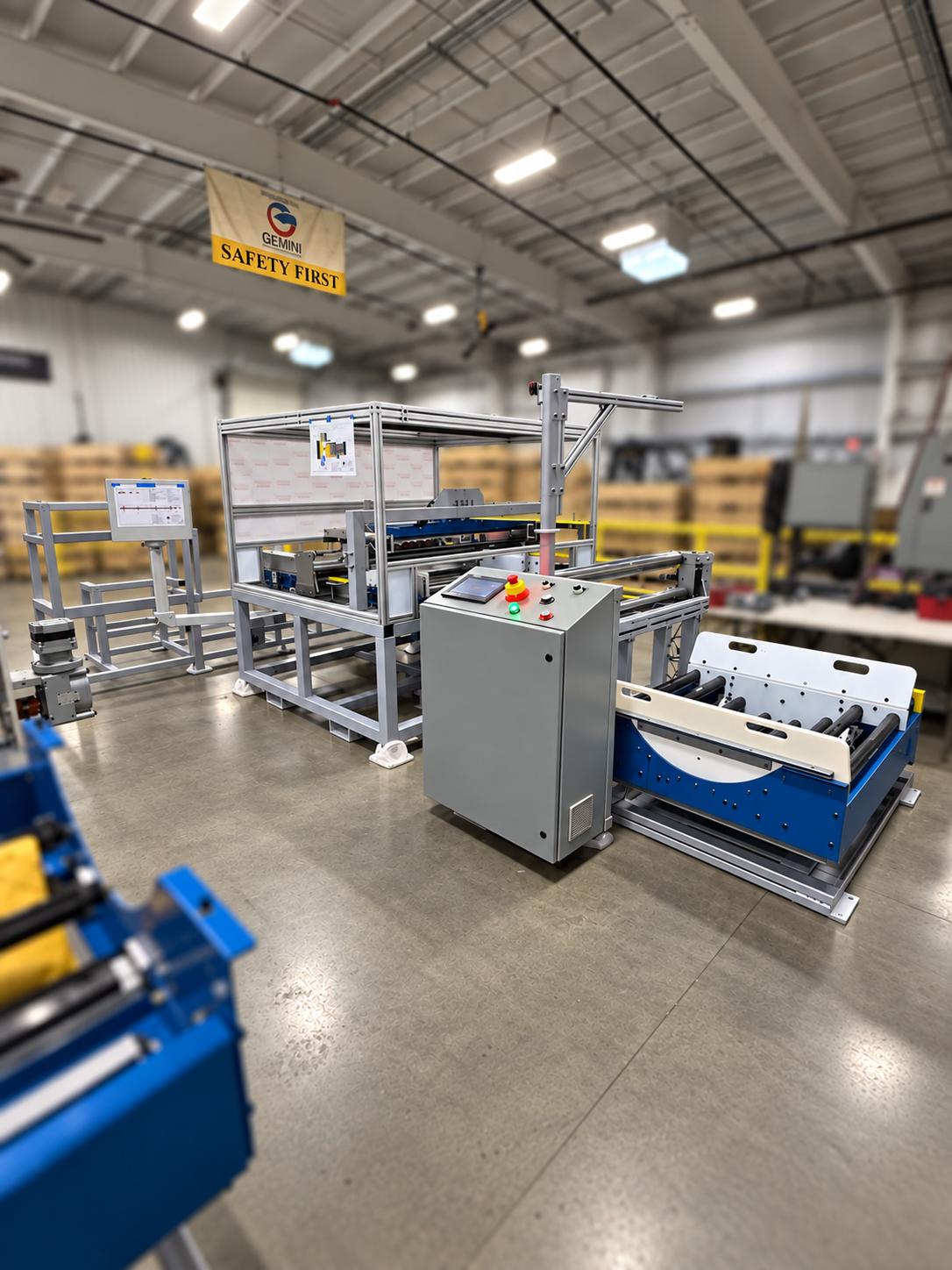
Some machine features can add substantial cost, but those features can still be worth the investment when they are necessary to achieve your goals. The question is whether the added capability solves a problem or delivers enough value to justify its cost.
For example, a customer focused on entering a market quickly may place a high value on throughput. Additional automation and faster operation could support the production volume needed to capture that opportunity. In that situation, a larger investment may make sense if the expected revenue supports it.
In the same way, a customer struggling to hire enough qualified people may decide that investing in more extensive automation is the best way to address the staffing shortage. Automating more of their process could reduce the labor required for production and remove their hiring bottleneck, even if it raises the initial price.
Ultimately, it all depends on your goals and budget. High-value features and requirements that can increase machine cost include:
Vision systems for inspection, guidance, or gauging
Automated sorting and changeovers
Servo drives instead of pneumatic systems
Tighter tolerances
Higher operating speeds
Connect the Investment to Measurable Results
To determine what belongs in your machine, we work through your production challenges with you, asking questions that help uncover needs you may not have identified yet. We’ll often ask questions to understand how certain design choices could connect to the results you’re seeking, like:
What is the current problem costing you? Understanding your costs lets you determine what an improvement could be worth. But there are many factors you’ll have to evaluate; consider labor, scrap, quality issues, lost capacity, and more.
Will production requirements grow? If you expect volume increases in the future or plan to enter new markets, you may want to plan your machine around higher capacity for the long term.
Which requirements are nonnegotiable? Most customers’ top priorities revolve around a combination of safety, part tolerances, throughput, and labor reduction.
These discussions help us turn a general concept into a project tailored to your production. Our goal is to include what the machine needs to succeed, then consider additional features where the budget and expected return allow them.
Discuss Your Custom Machine Budget With Gemini Industrial
If you are planning a custom machine, let’s start the conversation. Gemini Industrial can help you evaluate the options and determine the next step toward a machine that meets your needs.